Closing the Visibility Gap in Deck Safety - Product Release
.webp)
Every day, crew members work near deck railings while vessels are underway. Most of these activities are routine, but some create exposure to slips, trips, falls, and man-overboard incidents. Because these moments often occur outside direct supervision, operators have little visibility into how frequently the risk occurs and where unsafe behaviors are developing.
The Visibility Gap
Working near guard railings is a routine part of many deck operations, but it can also expose crew members to slips, trips, falls, and man-overboard incidents. According to OSHA data, slips, trips, and falls account for approximately 43% of maritime injuries in the United States, making them the largest single category of injury across maritime operations. Research from the American Club found that the average cost of a fall-related maritime incident was approximately $182,000 between 2013 and 2018, reflecting medical treatment, lost productivity, investigations, and operational disruption. In the most severe cases, a fall near a vessel's edge can result in a man-overboard event, which the UK Marine Accident Investigation Branch (MAIB) reports carries a fatality rate of around 40%.
The challenge is knowing when and where exposure occurs. Deck operations take place across large working areas, often during night operations, heavy weather, or periods of limited supervision. Because working near railings is typically part of routine operations rather than a reportable event, these exposures often go undocumented. As a result, patterns of unsafe behavior can develop without being consistently identified or addressed.
This is the visibility gap that must be solved.
Introducing Activity Near Railings Detection
FleetVision's Activity Near Railings feature was developed to provide operators with consistent, automated awareness of this category of risk.
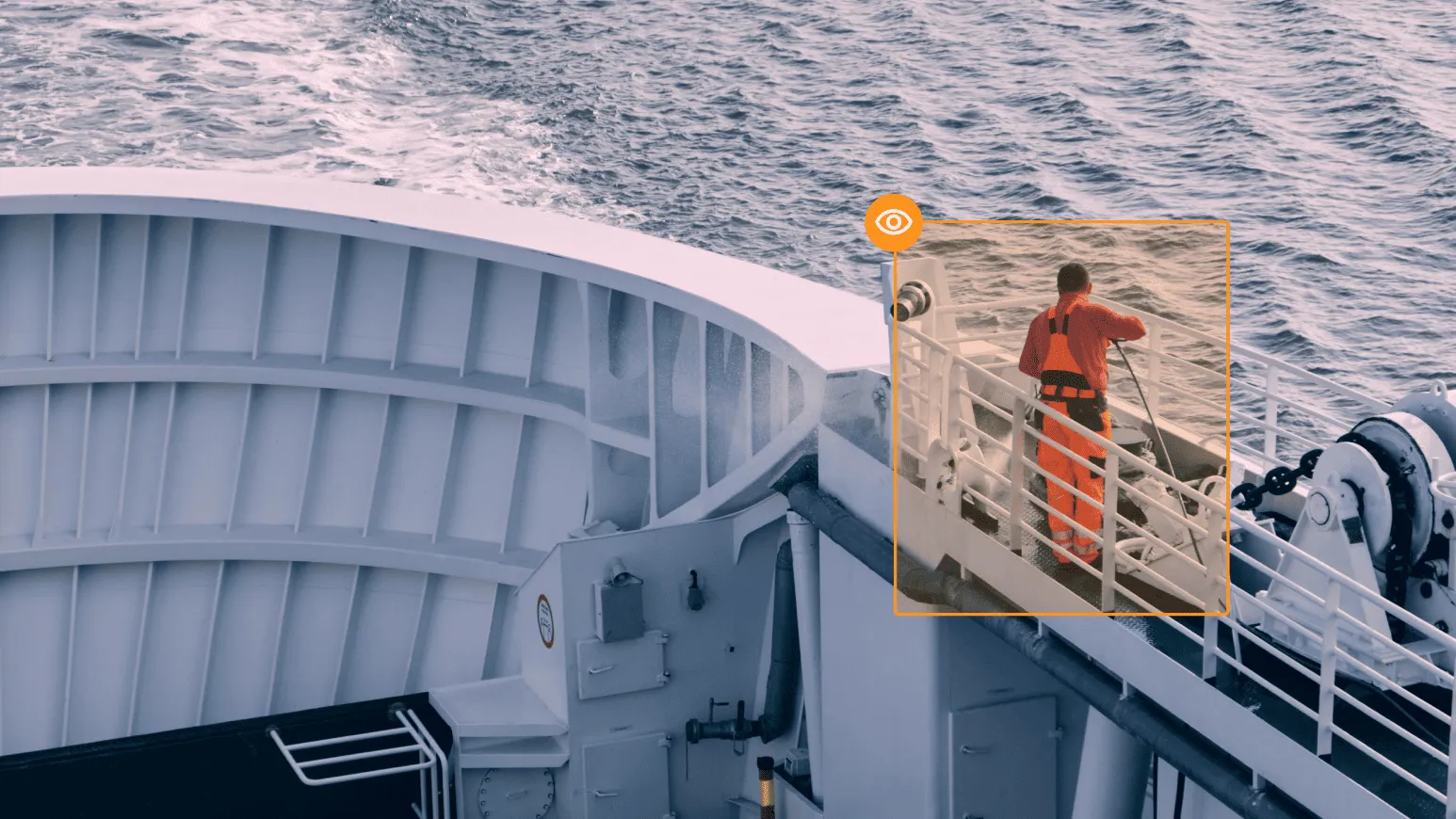
Using AI-powered video analytics, the system continuously monitors designated deck areas and identifies crew members operating within approximately one meter of a guard railing while the vessel is underway. It highlights high-risk activities such as passing through the railing, leaning over railings, and maintaining prolonged proximity during heavy weather. These observations are detected and recorded automatically, without requiring any additional input from the bridge team.
Each observation is categorized within FleetVision as a safety-related activity. Where relevant, an insight tag of "Slip, Trip, and Fall Hazard" is applied to surface the highest-risk events directly to the Master and their team. Coverage includes all deck areas with guard railings, while gangway operations are excluded to avoid unnecessary notifications during port activities. The result is a consistent and objective record of railing activity across the fleet, regardless of whether any individual on board witnessed it in real time.
Turning observations into operational insight
The immediate benefit of automated detection is a reliable record of when, where, and how railing-related behaviors occur on a vessel. Masters can use that record to identify risk and address unsafe behavior with crew members directly, based on specific, timestamped observations rather than secondhand accounts. This supports the reinforcement of safe work procedures around guard rails and provides a stronger foundation for coaching and corrective action.
For example, a crew member conducting routine inspections may repeatedly lean over a railing during rough weather without realizing it is unsafe behavior. Individually, these observations may appear minor. Over time, however, they can reveal patterns of exposure that warrant additional coaching, procedural review, or operational safeguards.
The same information provides HSQE teams with meaningful material for reporting and trend analysis of unsafe acts and near misses. Toolbox talks can be grounded in recorded observations from a vessel's own operations, and investigations can be supported by objective evidence rather than recall. At the fleet level, as observations accumulate, operators can identify recurring patterns across vessels, locations, and operating conditions, allowing safety initiatives to be prioritized based on observed behavior rather than anecdotal reporting.
Extending the reach of existing safety processes
AI-powered detection does not replace the safety culture and reporting processes that operators have built. Rather, it extends their reach into situations where continuous human observation is not always possible, creating a more complete picture of onboard risk.
Masters are already using Activity Near Railings observations to reinforce safe work procedures, improve toolbox talks, and identify unsafe trends across their fleets. Most instances of railing proximity will not result in injury, but understanding when and where they occur gives operators an earlier opportunity to intervene before an incident takes place.
By providing a continuous record of behaviors near railings, operators gain a stronger foundation for identifying emerging risks, reinforcing safe behaviors, and making more informed safety decisions across their fleets.
Learn more about FleetVision's Safety module and Activity Near Railings Detection at www.shipin.ai