

From boxships to car carriers, fires at sea are climbing in both frequency and impact. Industry analyses put 2022 at ~209 reported shipboard fires—and about ~250 by 2024—marking the highest levels in a decade. Meanwhile, fires remain a small slice of total maritime incidents by count, yet a heavyweight in losses. If you move cargo, insure it, or keep vessels running, these trends (and the root causes behind them) are impossible to ignore.
- Ship fires are surging.
In 2022 there were ~209 fire incidents at sea — and ~250 by 2024. That’s the highest in a decade and still climbing.
- Small share of incidents, huge share of losses.
Fires make up only ~2–3% of maritime incidents… but a whopping 15–27% of total losses by value.
- Container ships + car carriers = hot zone.
These two vessel types dominate recent fire stats — especially when cargo misbehaves.
- A container-ship fire every nine days.
On average, a serious boxship fire now erupts roughly once every 9 days. That’s not a typo.
- Where do most fires start? The engine room.
Roughly 50–60% of shipboard fires ignite in the engine room — where fuel, heat, and ignition sources are best friends.
- The #1 spark: hot surfaces + oil leaks.
About 60% of engine-room fires happen when fuel or lube oil sprays onto uninsulated exhausts/turbos (>200 °C). - Maintenance matters (a lot).
Dirty spaces, missing insulation, loose fittings, and “almost right” spare parts show up again and again in investigations.
- Electrical gremlins are the runner-up.
Loose terminals, dust, moisture, and overloaded circuits lead to hot switchboards and arc-flash starts.
- Cargo can be the culprit — especially when it lies.
Misdeclared dangerous goods are repeatedly flagged as the leading cause of container-ship cargo fires. Up to ~5% of containers may hide undeclared hazmat.
- The fix is unglamorous — and effective.
Relentless engine-room housekeeping, electrical tightening schedules, dangerous goods screening (including AI), better detection/monitors on deck, and realistic drills save ships.
The pattern is clear: engine rooms remain the top ignition site across cargo fleets, while cargo-initiated fires—especially on containerships and ro-ros—drive the biggest, costliest headlines. Human factors underlie much of the risk, and the remedies are known: disciplined maintenance, rigorous electrical upkeep, aggressive screening for misdeclared dangerous goods (with penalties that deter), and modern detection/suppression on deck. With rule changes (like IMDG updates) and technology upgrades rolling in, the industry has a real shot at bending the curve—if we execute relentlessly.
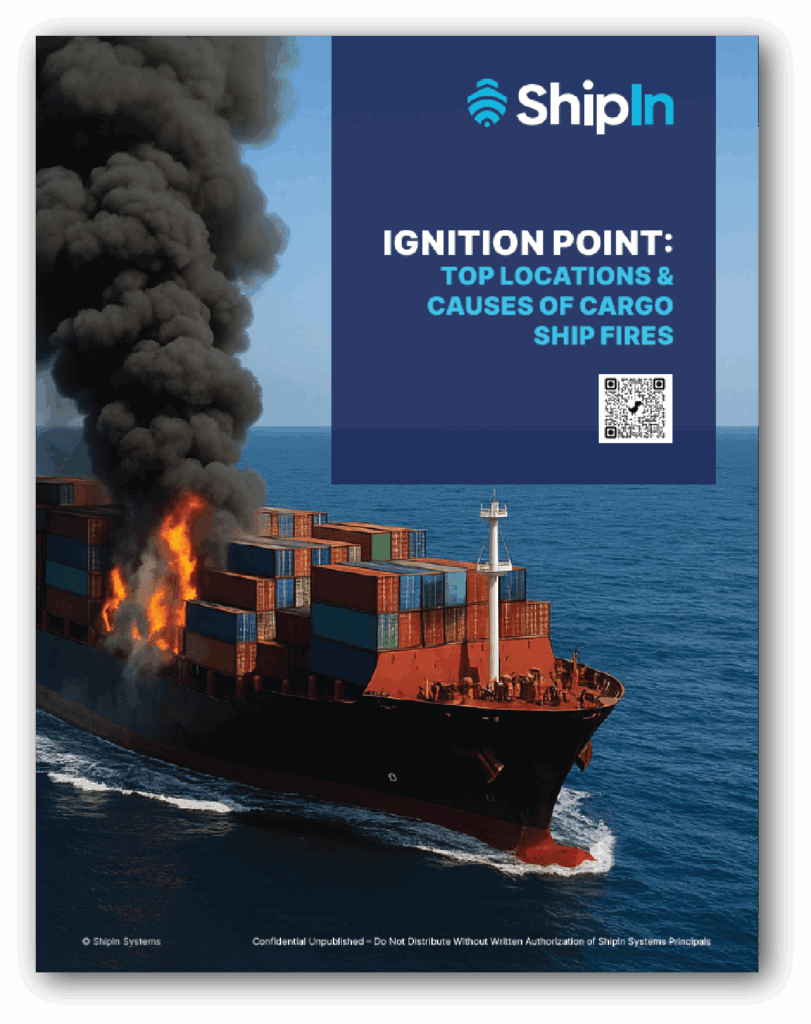
Looking for more information on this topic? Download our Whitepaper: Ignition Point: Top Locations & Causes of Cargo Ship Fires
Shipboard fires are rising—and the cost is too. Our latest analysis breaks down where fires start and why, across container ships, bulk carriers, and tankers. Key insights include:
- Engine rooms are the #1 ignition site, responsible for roughly half of incidents.
- Misdeclared dangerous goods remain the leading cause of container-ship fires.
- Human factors contribute to the vast majority of cases—training and maintenance matter.
Get practical takeaways on prevention, early detection, and response, plus vessel-specific risk profiles.
